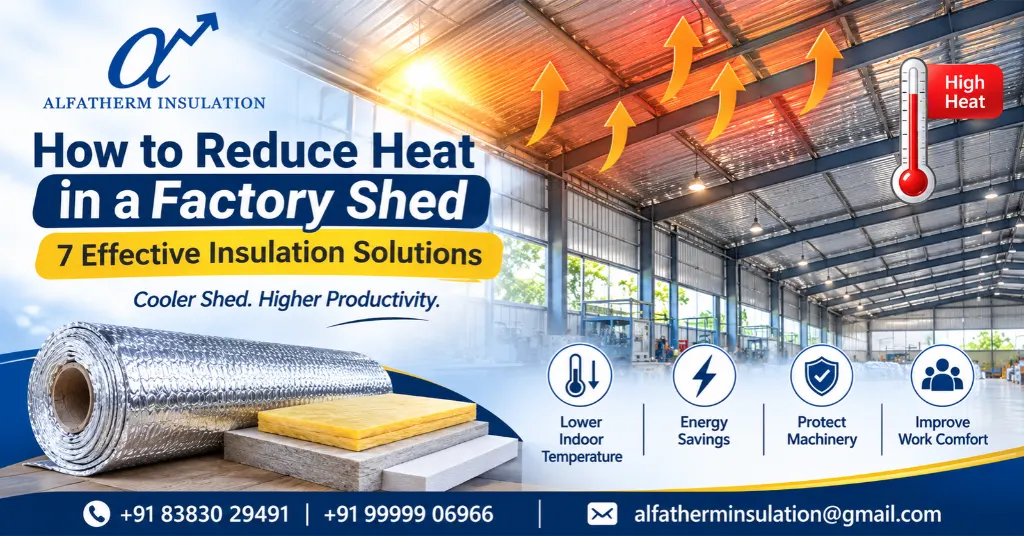
How to Reduce Heat in a Factory Shed: 7 Effective Insulation Solutions
7 Effective Ways to Reduce Heat in a Factory Shed
Factory sheds often become extremely hot during summer because metal roofs absorb direct sunlight and transfer heat into the building. High indoor temperatures can make employees uncomfortable, affect machinery performance, damage heat-sensitive materials and increase electricity consumption. Therefore, understanding How To Reduce Heat In A Factory Shed is important for maintaining a comfortable and productive industrial environment.
The right insulation system helps control heat entering through roofs and walls. Businesses can consider reflective bubble insulation, fiberglass wool, mineral wool, Rockwool and XLPE insulation depending on their building structure and requirements.
In this guide, we explain practical insulation methods, compare different materials and discuss important factors to consider before purchasing an insulation solution.
1. Understand Why Factory Sheds Become Hot
Most industrial sheds use metal roofing because it is lightweight, durable and easy to install. However, metal sheets absorb solar radiation and transfer heat towards the interior.
There are three common reasons behind excessive heat:
Solar radiation: Direct sunlight heats the external roof surface.
Heat conduction: Metal roofing transfers absorbed heat inside the building.
Hot air accumulation: Warm air rises and collects near the roof.
Before deciding How To Reduce Heat In A Factory Shed, identify whether the main problem comes from roof heating, wall exposure, poor ventilation or industrial machinery.
2. Install Reflective Bubble Insulation
Bubble insulation is a popular option for industrial buildings with metal roofing. It generally consists of polyethylene air bubbles enclosed between reflective aluminium foil layers.
The reflective surface helps reduce radiant heat transfer when installed with a suitable adjacent air space. The trapped air also helps slow heat movement.
What is bubble insulation?
Bubble insulation is a reflective thermal insulation material designed to reduce radiant heat exchange. It is commonly installed beneath metal roofs, walls and other suitable building surfaces.
Why is bubble wrap a good insulator?
The air trapped inside the bubbles slows heat transfer, while reflective foil helps reduce radiant heat exchange. However, ordinary packaging bubble wrap is not equivalent to purpose-designed building insulation.
Alfatherm offers Aerolam Bubble Insulation for suitable industrial and building applications.
3. Choose Fiberglass Wool for Roof Insulation
Fiberglass wool is manufactured using fine glass fibres that form a lightweight insulating blanket or slab. Its fibrous structure traps air and slows heat movement through the insulated roof or wall assembly.
What is fiberglass wool?
Fiberglass wool is a thermal and acoustic insulation material made from fine glass fibres. It is available in different thicknesses and densities according to the application.
It can be installed beneath factory roofing, inside suitable wall cavities and within insulated panel systems. Besides controlling heat transfer, it also helps absorb unwanted industrial noise.
For businesses exploring How To Reduce Heat In A Factory Shed, fiberglass wool can be a suitable option when proper coverage and moisture protection are provided.
4. Consider Mineral Wool and Rockwool Insulation
Mineral wool is manufactured from mineral-based raw materials and is available in different densities and thicknesses. Rockwool is a type of mineral wool produced using rock-based materials.
What is mineral wool insulation?
It is a fibrous insulation material that reduces heat transfer by trapping air between its fibres. It also provides acoustic insulation and, depending on the product grade, fire resistance.
Mineral wool is useful in industrial environments where thermal insulation, sound absorption and fire performance are important. Always check the manufacturer’s declared temperature limits and fire classification before selecting a product.
5. Improve Roof Ventilation and Use Reflective Coatings
Insulation is important, but ventilation also plays a major role in controlling indoor temperatures. Hot air naturally rises and collects near the roof. Without proper ventilation, this accumulated heat can remain inside the shed.
Consider these improvements:
Install suitable ridge ventilators or turbo ventilators to exhaust accumulated hot air.
Provide properly designed low-level air inlets.
Apply suitable light-coloured or reflective roof coatings to reduce solar heat absorption.
Keep ventilation openings clear of dust and obstructions.
Combining roof insulation with ventilation and reflective coatings can provide better results than relying on only one method.
6. Compare Different Factory Shed Insulation Materials
Choosing the right material depends on roof construction, operating temperature, moisture conditions, budget and required insulation performance.
Insulation material | Main benefit | Suitable application |
|---|---|---|
Reflects radiant heat | Metal shed roofs | |
Thermal and acoustic insulation | Roofs and walls | |
Thermal and acoustic performance | Industrial buildings | |
Rockwool | Thermal and fire performance | Industrial roofs and equipment |
XLPE insulation | Closed-cell structure and moisture resistance | Selected roofs, ducts and pipes |
Rigid thermal insulation | Walls, floors and suitable roofs |
Each material works differently. Reflective bubble insulation helps control radiant heat, while fibrous materials slow heat transfer through their structure. XLPE and XPS are closed-cell foam materials with different physical properties.
When evaluating How To Reduce Heat In A Factory Shed, businesses should compare product specifications instead of choosing insulation based on price alone.
7. Check These Points Before Purchasing Insulation
Before selecting an insulation solution, consider the following factors:
Roof construction: Identify whether the building has metal sheets, sandwich panels or another roofing system.
Insulation thickness: Select thickness according to the required thermal resistance and available installation space.
Material density: Check product density and specifications, especially for fiberglass and mineral wool.
Moisture protection: Ensure suitable vapour control and condensation management.
Installation quality: Proper joints, overlaps and fixing methods help prevent gaps.
Fire safety: Check the product’s fire classification and applicable building requirements.
Maintenance: Select materials that can withstand the factory’s operating conditions.
A professional assessment can help determine How To Reduce Heat In A Factory Shed without unnecessary material expenses or unsuitable installations.
8. How Alfatherm Insulation Supports Industrial Requirements
Selecting suitable insulation products is an important step towards improving factory working conditions. Alfatherm Insulation provides different insulation materials for industrial, commercial and building applications.
Its product range includes:
Aerolam Bubble Insulation: For reflective roof insulation.
Fiberglass Wool: For thermal and acoustic applications.
Mineral Wool and Rockwool: For industrial thermal and sound insulation.
Aerolam XLPE: For suitable under-deck, duct and pipe insulation applications.
XPS Insulation Sheets: For selected building insulation requirements.
Alfatherm Insulation has been operating since 1986. Businesses can discuss their roof structure, installation requirements and operating conditions before selecting a suitable product.
If you are researching How To Reduce Heat In A Factory Shed, consulting an experienced insulation supplier can help you compare material specifications, thicknesses and installation options before making a purchase.
Conclusion
Reducing excessive heat inside an industrial building requires suitable insulation, effective ventilation and proper roof treatment. The right solution depends on the building design, operating environment and budget.
Understanding How To Reduce Heat In A Factory Shed helps businesses make informed decisions about insulation materials. Whether you choose bubble insulation, fiberglass wool, mineral wool or XLPE, proper product selection and installation are essential for long-term performance.
For industrial insulation solutions, contact Alfatherm Insulation.
Bubble insulation is a reflective material made using polyethylene air bubbles and aluminium foil layers. It helps reduce radiant heat transfer and is commonly used beneath metal roofs.
Fiberglass wool is an insulation material manufactured from fine glass fibres. It traps air within its structure, helping reduce heat transfer and absorb sound.
Mineral wool is a fibrous insulation material manufactured from mineral-based raw materials. It provides thermal and acoustic insulation and is available in different densities and thicknesses.a
Yes. Bubble insulation products are available in India for residential, commercial and industrial applications. Alfatherm also offers Aerolam Bubble Insulation solutions.
Purpose-designed reflective bubble insulation can help reduce radiant heat transfer. Ordinary packaging bubble wrap is not designed for permanent building insulation.
0 comments