Best Thermal Insulation for Walls: A Complete Guide to Choosing the Right Material | Alfatherm Insulation
Best Thermal Insulation for Walls: Materials, Benefits and Applications
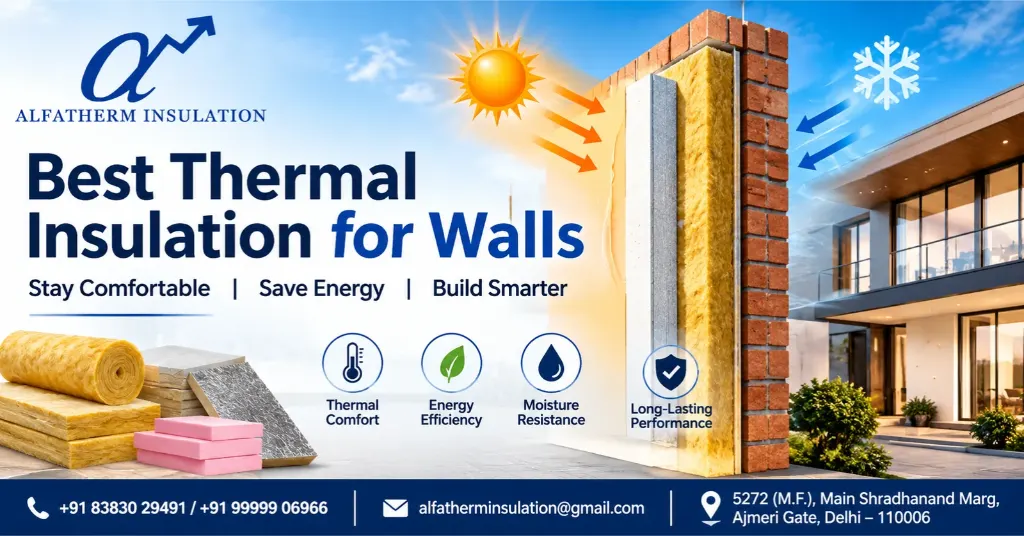
Maintaining a comfortable indoor temperature is important for every residential, commercial and industrial building. During summer, outside heat can enter through walls, making rooms uncomfortable and increasing air conditioning requirements. During winter, heat can escape through poorly insulated surfaces. Choosing the Best Thermal Insulation for Walls helps control heat transfer, improve indoor comfort and support better energy efficiency throughout the year.
Different buildings require different insulation materials depending on their construction, climate, available space and budget. Some materials are suitable for cavity walls, while others work better in internal partitions, external wall systems or industrial buildings.
Alfatherm Insulation offers a range of insulation materials, including glass wool, mineral wool, rockwool, extruded polystyrene sheets and other insulation solutions. This guide explains their features, benefits and applications to help you make an informed decision.
What Is Thermal Wall Insulation?
Thermal wall insulation is a protective layer installed within, behind or over a wall structure to slow down heat movement between indoor and outdoor environments. It works by reducing heat transfer through the building envelope, helping maintain more stable indoor temperatures.
When selecting the Best Thermal Insulation for Walls , it is important to understand that insulation materials have different thermal properties. Their effectiveness depends on thermal conductivity, thickness, density, installation quality and the overall wall construction.
Properly installed insulation can also help reduce heating and cooling requirements. However, the final results depend on windows, ventilation, roof insulation, air leakage and other building elements.
Key Benefits of Wall Insulation
- Better Indoor Temperature Control
Insulation reduces unwanted heat movement through walls. During hot weather, it helps limit external heat entering rooms. In colder conditions, it slows heat loss, supporting a more comfortable indoor environment. - Improved Energy Efficiency
A well-designed insulation system can reduce the workload of air conditioners and heating equipment. This may help lower electricity consumption and operating expenses over time. - Enhanced Indoor Comfort
Temperature differences between rooms and walls can affect everyday comfort. Suitable insulation helps create more consistent indoor conditions in residential properties, offices and commercial spaces. - Noise Reduction
Certain materials, particularly fibrous insulation such as glass wool and mineral wool, also absorb sound. Their acoustic performance depends on thickness, density and wall construction. - Long-Term Building Performance
Selecting suitable insulation and installing it correctly can support building efficiency over many years. Moisture protection, fire requirements and material durability must also be considered.
Types of Materials for Wall Insulation
There is no single material suitable for every building. The Best Thermal Insulation for Walls depends on the project’s technical requirements and installation conditions.
Extruded Polystyrene, commonly known as XPS, is a rigid foam insulation material with a closed-cell structure. It offers thermal resistance, relatively low water absorption and good compressive strength in suitable grades.
XPS boards can be considered when selecting the Best Thermal Insulation for Walls , particularly where rigid boards and moisture resistance are important. They are used in suitable wall assemblies, floors and foundation applications.
Glass Wool Insulation
Glass wool is a fibrous insulation material manufactured using glass fibres. It traps air within its structure, helping reduce heat transfer. It also provides sound absorption, making it useful for internal partitions, cavity walls and commercial buildings.
It is available in different forms, including rolls, slabs and other configurations. Correct installation and suitable protective coverings are important for effective performance.
Rockwool and Mineral Wool
Rockwool and other mineral wool products are manufactured from mineral-based raw materials. Their fibrous structure provides thermal insulation and sound absorption. Many mineral wool products also offer useful fire performance, depending on their tested classification and complete wall assembly.
They are commonly considered for commercial buildings, industrial facilities, partitions and cavity wall systems.
XLPE Insulation
Cross-linked polyethylene, or XLPE, is a closed-cell foam material used in several insulation applications. Its lightweight construction and moisture resistance make it suitable for selected building and HVAC applications.
Its suitability for a particular wall depends on the product specification, facing, fixing method and required thermal performance.
Comparison of Different Wall Insulation Materials
Before choosing the Best Thermal Insulation for Walls , compare the materials according to their actual specifications and intended uses.
Insulation material | Main characteristics | Suitable applications |
|---|---|---|
XPS | Rigid, closed-cell, moisture resistant | Suitable wall systems, floors |
Glass wool | Fibrous, thermal and acoustic performance | Cavity walls, partitions |
Rockwool | Fibrous, thermal and sound absorption | Commercial and industrial walls |
Mineral wool | Available in different densities and forms | Partitions, cavity walls |
XLPE | Lightweight, closed-cell foam | Selected wall and HVAC applications |
The comparison is general. Product performance varies by manufacturer, grade, thickness and installation method. Always review technical data before making a selection.
tWhere Is Wall Insulation Used?
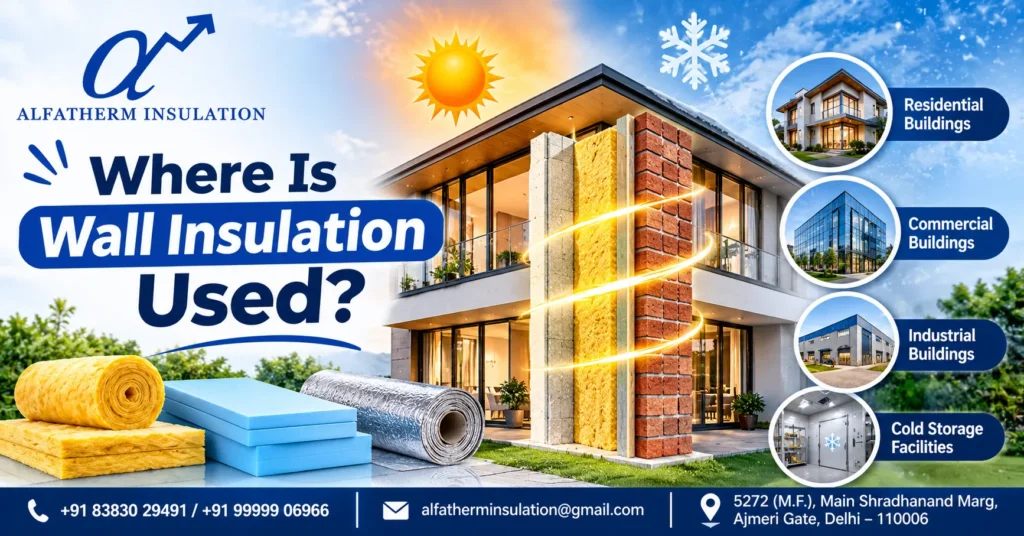
The best thermal insulation for walls can serve different purposes depending on the building design and environmental conditions.
Residential Buildings
Homes can benefit from insulation in external walls, cavity walls and internal partitions. It helps reduce unwanted heat movement and supports comfortable living spaces throughout changing seasons.
Commercial Buildings
Offices, shopping complexes, hospitals and educational institutions require effective temperature management. Suitable wall insulation can support indoor comfort and help manage cooling requirements.
Industrial Buildings
Factories and warehouses may experience significant temperature variations. Insulation helps control heat transfer through building walls and can support more stable working environments.
Cold Storage Facilities
Cold rooms require carefully designed insulation systems to maintain their specified temperatures. Material selection should consider thermal conductivity, moisture control, vapour barriers and joint sealing.
What Should You Check Before Buying?
Selecting the best thermal insulation for walls requires more than comparing prices. Consider these important factors:
Thermal conductivity: Compare declared values under appropriate test conditions. Lower conductivity generally means better insulating performance at equal thickness.
Thickness: Select thickness according to project requirements and applicable building standards.
Moisture resistance: Evaluate water absorption, condensation risks and vapour control requirements.
Fire performance: Check product classification and local fire safety regulations.
Density and strength: Ensure the product suits the wall system and expected mechanical conditions.
Installation: Consider fixing systems, joints, protective layers and available installation space.
Where Is Wall Insulation Used?
The best thermal insulation for walls can serve different purposes depending on the building design and environmental conditions.
Residential Buildings
Homes can benefit from insulation in external walls, cavity walls and internal partitions. It helps reduce unwanted heat movement and supports comfortable living spaces throughout changing seasons.
Commercial Buildings
Offices, shopping complexes, hospitals and educational institutions require effective temperature management. Suitable wall insulation can support indoor comfort and help manage cooling requirements.
Industrial Buildings
Factories and warehouses may experience significant temperature variations. Insulation helps control heat transfer through building walls and can support more stable working environments.
Cold Storage Facilities
Cold rooms require carefully designed insulation systems to maintain their specified temperatures. Material selection should consider thermal conductivity, moisture control, vapour barriers and joint sealing.
What Should You Check Before Buying?
Selecting the best thermal insulation for walls requires more than comparing prices. Consider these important factors:
Thermal conductivity: Compare declared values under appropriate test conditions. Lower conductivity generally means better insulating performance at equal thickness.
Thickness: Select thickness according to project requirements and applicable building standards.
Moisture resistance: Evaluate water absorption, condensation risks and vapour control requirements.
Fire performance: Check product classification and local fire safety regulations.
Density and strength: Ensure the product suits the wall system and expected mechanical conditions.
Installation: Consider fixing systems, joints, protective layers and available installation space.
Budget: Compare products with similar specifications instead of selecting only by initial price.
Correct installation is equally important. Gaps, compression, exposed joints and moisture entry can reduce insulation effectiveness. Consult a qualified professional when designing a complete wall assembly.
Where Is Wall Insulation Used?
The best thermal insulation for walls can serve different purposes depending on building design and environmental conditions.
Residential Buildings
Homes can benefit from insulation in external walls, cavity walls and internal partitions. It helps reduce unwanted heat movement and supports comfortable living spaces throughout changing seasons.
Commercial Buildings
Offices, shopping complexes, hospitals and educational institutions require effective temperature management. Suitable wall insulation can support indoor comfort and help manage cooling requirements.
Industrial Buildings
Factories and warehouses may experience significant temperature variations. Insulation helps control heat transfer through building walls and can support more stable working environments.
Cold Storage Facilities
Cold rooms require carefully designed insulation systems to maintain specified temperatures. Material selection should consider thermal conductivity, moisture control, vapour barriers and joint sealing.
What Should You Check Before Buying?
Selecting the best thermal insulation for walls requires more than comparing prices. Consider these important factors:
Thermal conductivity: Compare declared values under appropriate test conditions. Lower conductivity generally means better insulating performance at equal thickness.
Thickness: Select thickness according to project requirements and applicable building standards.
Moisture resistance: Evaluate water absorption, condensation risks and vapour control requirements.
Fire performance: Check product classification and local fire safety regulations.
Density and strength: Ensure the product suits the wall system and expected mechanical conditions.
Installation: Consider fixing systems, joints, protective layers and available installation space.
Budget: Compare products with similar specifications instead of selecting only by initial price.
Correct installation is equally important. Gaps, compression, exposed joints and moisture entry can reduce insulation effectiveness. Consult a qualified professional when designing a complete wall assembly.
Why Choose Alfatherm Insulation?
Alfatherm Insulation has been serving insulation requirements since 1986. The company manufactures, imports and supplies different insulation materials for residential, commercial and industrial applications.
Its product range includes glass wool, mineral wool, rockwool, resin bonded slabs, ceramic fibre products, extruded polystyrene sheets, XLPE insulation and bubble insulation materials.
Customers looking for the best thermal insulation for walls can discuss their project requirements with the team. Sharing wall dimensions, building type, environmental conditions and expected performance makes product selection easier.
Instead of choosing a material only because it is popular, request its technical data sheet and confirm its suitability for the intended wall construction.
Contact Alfatherm Insulation
For product information, technical guidance and insulation requirements, contact Alfatherm Insulation.
Phone: +91 83830 29491 / +91 99999 06966
Email: alfatherminsulation@gmail.com
Address: 5272 (M.F.), Main Shradhanand Marg, Ajmeri Gate, Delhi – 110006
Website: Alfatherm Insulation
Products: Explore Insulation Products
Conclusion
Choosing the best thermal insulation for walls is an important step towards improving building comfort and managing unwanted heat transfer. XPS, glass wool, rockwool, mineral wool and XLPE each offer different characteristics, making it essential to select according to the application.
Consider thermal conductivity, thickness, moisture resistance, fire classification, installation conditions and overall project requirements before purchasing. A properly selected and installed insulation system can support long-term building performance.
Contact Alfatherm Insulation to discuss your requirements and identify a suitable insulation solution for your project.t: Compare products with similar specifications instead of selecting only by initial price.
Correct installation is equally important. Gaps, compression, exposed joints and moisture entry can reduce insulation effectiveness. Consult a qualified professional when designing a complete wall assembly.
Where Is Wall Insulation Used?
The best thermal insulation for walls can serve different purposes depending on building design and environmental conditions.
Residential Buildings
Homes can benefit from insulation in external walls, cavity walls and internal partitions. It helps reduce unwanted heat movement and supports comfortable living spaces throughout changing seasons.
Commercial Buildings
Offices, shopping complexes, hospitals and educational institutions require effective temperature management. Suitable wall insulation can support indoor comfort and help manage cooling requirements.
Industrial Buildings
Factories and warehouses may experience significant temperature variations. Insulation helps control heat transfer through building walls and can support more stable working environments.
Cold Storage Facilities
Cold rooms require carefully designed insulation systems to maintain specified temperatures. Material selection should consider thermal conductivity, moisture control, vapour barriers and joint sealing.
What Should You Check Before Buying?
Selecting the best thermal insulation for walls requires more than comparing prices. Consider these important factors:
Thermal conductivity: Compare declared values under appropriate test conditions. Lower conductivity generally means better insulating performance at equal thickness.
Thickness: Select thickness according to project requirements and applicable building standards.
Moisture resistance: Evaluate water absorption, condensation risks and vapour control requirements.
Fire performance: Check product classification and local fire safety regulations.
Density and strength: Ensure the product suits the wall system and expected mechanical conditions.
Installation: Consider fixing systems, joints, protective layers and available installation space.
Budget: Compare products with similar specifications instead of selecting only by initial price.
Correct installation is equally important. Gaps, compression, exposed joints and moisture entry can reduce insulation effectiveness. Consult a qualified professional when designing a complete wall assembly.
Why Choose Alfatherm Insulation?
Alfatherm Insulation has been serving insulation requirements since 1986. The company manufactures, imports and supplies different insulation materials for residential, commercial and industrial applications.
Its product range includes glass wool, mineral wool, rockwool, resin bonded slabs, ceramic fibre products, extruded polystyrene sheets, XLPE insulation and bubble insulation materials.
Customers looking for the best thermal insulation for walls can discuss their project requirements with the team. Sharing wall dimensions, building type, environmental conditions and expected performance makes product selection easier.
Instead of choosing a material only because it is popular, request its technical data sheet and confirm its suitability for the intended wall construction.
Contact Alfatherm Insulation
For product information, technical guidance and insulation requirements, contact Alfatherm Insulation.
Phone: +91 83830 29491 / +91 99999 06966
Email: alfatherminsulation@gmail.com
Address: 5272 (M.F.), Main Shradhanand Marg, Ajmeri Gate, Delhi – 110006
Website: Alfatherm Insulation
Products: Explore Insulation Products
Conclusion
Choosing the best thermal insulation for walls is an important step towards improving building comfort and managing unwanted heat transfer. XPS, glass wool, rockwool, mineral wool and XLPE each offer different characteristics, making it essential to select according to the application.
Consider thermal conductivity, thickness, moisture resistance, fire classification, installation conditions and overall project requirements before purchasing. A properly selected and installed insulation system can support long-term building performance.
Contact Alfatherm Insulation to discuss your requirements and identify a suitable insulation solution for your project.
0 comments