

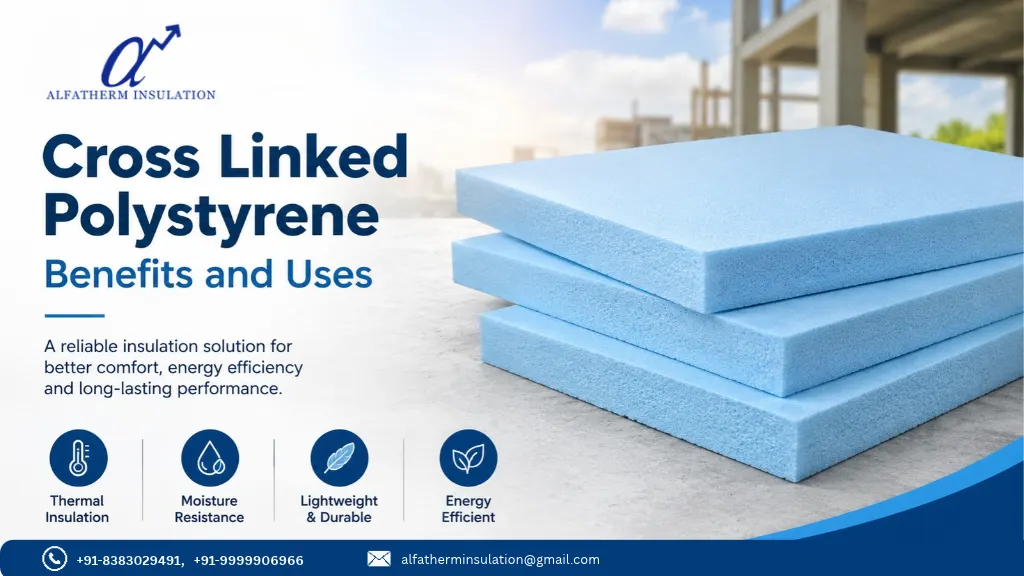
Cross Linked Polystyrene: Benefits and Uses | Alfatherm Insulation
Cross Linked Polystyrene: Benefits, Features and Uses
Choosing insulation can improve comfort and reduce heat transfer. Cross Linked Polystyrene is a search term used for a polystyrene-based insulation product, but the exact material should be confirmed before purchase. Different insulation products have different properties, so the right choice depends on the building, moisture exposure, required strength, installation method and budget.
Alfatherm Insulation supplies materials for building and industrial needs. This guide explains key features, possible uses and practical checks to help buyers make an informed decision about Cross Linked Polystyrene.
What Is Cross Linked Polystyrene?
Cross Linked Polystyrene refers to polystyrene described as cross-linked, but the term should not automatically be treated as the same as Extruded Polystyrene (XPS) or Cross Linked Polyethylene (XLPE). These names refer to different materials and should not be used interchangeably.
XPS is a rigid foam insulation material made through an extrusion process. Its closed-cell structure helps reduce heat transfer and water absorption. Performance depends on grade, thickness and installation. Cross Linked Polystyrene before choosing a grade.
Key Features and Benefits
Thermal Insulation
Insulation slows heat transfer through roofs, walls and floors. A suitable product can stabilise indoor temperatures and reduce heating or cooling demand. When comparing Cross Linked Polystyrene options, check the declared thermal conductivity and recommended thickness rather than relying on the product name alone.
Moisture Resistance
Some closed-cell boards have low water absorption, which can help in damp-prone areas. Resistance varies, and insulation does not replace waterproofing or drainage.
Lightweight Handling
Many rigid polystyrene boards are lightweight and easy to carry, cut and position. This can simplify installation when the size and fixing method suit the project.
Strength and Durability
Some rigid boards offer compressive strength for floors and other loaded areas. Not every board is load-bearing. Check the rated compressive strength and intended application before selecting Cross Linked Polystyrene beneath floors, slabs or similar structures.
Energy Efficiency
A suitable insulation layer can reduce heat transfer through a building envelope. This can improve comfort and help manage energy use. Results also depend on building design, air leakage, thermal bridges, climate and installation quality. These factors matter when assessing Cross Linked Polystyrene.
Key Properties to Compare
Different insulation products should be compared using verified specifications. The table below provides a practical checklist rather than claiming that every polystyrene product has identical performance.
Feature | What Buyers Should Check |
|---|---|
Material type | Confirm the polymer and manufacturing process |
Thermal performance | Review declared thermal conductivity |
Moisture resistance | Check water absorption data |
Weight | Confirm board weight and dimensions |
Compressive strength | Match the rating to expected loads |
Available form | Check sheets, boards or other supplied formats |
Applications | Confirm suitability for the intended location |
Fire performance | Review the product’s fire classification |
Installation | Follow manufacturer instructions |
Cost | Compare products with equivalent specifications |
Use this table and the product data sheet when evaluating Cross Linked Polystyrene. A product name or general description is not enough to confirm performance.

Where Can Polystyrene Insulation Be Used?
Roofs and Ceilings
Suitable insulation boards can help reduce heat transfer through a roof and improve indoor comfort. Roof design, weather exposure, fire requirements and fixing method affect selection.
Walls
Insulation in a suitable wall system can help reduce heat moving between indoor and outdoor spaces. Consider wall construction, space, moisture control and thickness. Gaps and poorly fitted joints can reduce performance, so careful installation matters.
Floors and Foundation
Some XPS products are used below floors or concrete slabs where their strength and moisture properties meet the design requirements. Not every Cross Linked Polystyrene product suits foundations.
Cold Storage
Cold rooms and temperature-controlled buildings need insulation selected for their operating conditions. The system may need suitable panels, vapour control, sealed joints and compatible finishes. Ask for technical advice before specifying a material for refrigeration applications.
Commercial and Industrial Buildings
Warehouses, offices and production spaces may use insulation to manage heat transfer and improve comfort. The correct solution depends on the building envelope, process conditions, local requirements and expected service life. Confirm whether Cross Linked Polystyrene meets those conditions.
What Should You Check Before Buying?
Before ordering Cross Linked Polystyrene, review these points:
Material identity: Confirm whether the product is cross-linked polystyrene, XPS or another material.
Thickness: Select a suitable thickness for the required thermal performance.
Thermal data: Compare declared conductivity values under stated test conditions.
Strength: Check whether the product can handle expected loads.
Moisture: Review water absorption, waterproofing and drainage needs.
Fire safety: Check classification and relevant building requirements.
Installation: Follow instructions for cutting, fitting, sealing and fixing.
Budget: Compare products with similar properties, not price alone.
These checks help buyers select Cross Linked Polystyrene only when the verified product is appropriate for the job.
Why Choose Alfatherm Insulation?
Alfatherm Insulation supplies insulation materials for different building and industrial applications. Customers can explain their project, required dimensions and installation conditions to the team and ask which available product best matches their needs.
If you are considering Cross Linked Polystyrene, request the exact product name, technical data sheet and recommended uses before placing an order. This prevents confusion between similarly named materials. Choose based on documented performance and application suitability.
Ask Alfatherm about Cross Linked Polystyrene specifications. Confirm Cross Linked Polystyrene suits your project needs.
Contact Alfatherm Insulation
For product information and help identifying a suitable insulation material, contact Alfatherm Insulation.
Phone: +91 83830 29491 / +91 99999 06966
Email: alfatherminsulation@gmail.com
Address: 5272 (M.F.), Main Shradhanand Marg, Ajmeri Gate, Delhi – 110006
Soical Media: Alfatherm Insulation
Conclusion
Cross Linked Polystyrene may refer to a specific polystyrene-based product, so confirming its exact identity is an important first step. Suitable polystyrene insulation products can help reduce heat transfer and support building comfort when correctly selected and installed. Their performance depends on the material, thickness, moisture exposure, strength, fire classification and overall construction system.
Review technical specifications instead of relying on a name alone. Contact Alfatherm Insulation to discuss your requirements and identify a product that suits your project.

0 comments