
Best Insulation for PEB Buildings: A Complete Guide
Introduction
Pre-Engineered Buildings (PEBs) are widely used for factories, warehouses, manufacturing units, logistics centres and commercial facilities. These buildings are valued for their quick construction, flexible design and efficient use of space. However, metal roofs and wall panels can transfer significant heat into the building, especially during hot weather. Selecting the Best insulation for PEB buildings is essential for improving indoor comfort, managing energy consumption and supporting better working conditions.
The right insulation system depends on the building’s purpose, roof design, local climate, moisture exposure and required thermal performance. Options such as mineral wool, glass wool, reflective bubble insulation and other suitable insulation products can help meet different project requirements. Alfatherm Insulation supplies insulation materials for industrial and commercial applications, including products used in the PEB sector.
What Is PEB Building Insulation?
PEB building insulation refers to materials installed within or alongside a building’s roof and wall systems to reduce unwanted heat transfer. These materials create a thermal barrier between the external environment and the indoor space.
Metal structures can heat up quickly under direct sunlight. Without appropriate insulation, this heat may increase indoor temperatures and place additional demands on air-conditioning or ventilation systems. During colder weather, insulation can also help limit heat loss where heating is required.
Choosing the Best insulation for PEB buildings requires evaluating the complete building envelope rather than selecting a material based only on price. Roof construction, wall panels, air gaps, ventilation and installation quality all influence the final performance of the system.
Why Do PEB Buildings Need Insulation?
Insulation offers several practical benefits for industrial and commercial buildings.
- Better Temperature Control
Insulation helps reduce heat transfer through roofs and walls. This can make indoor environments more comfortable for workers and improve conditions for equipment and stored materials that require temperature control. - Improved Energy Efficiency
When insulation reduces unwanted heat entering a building, cooling systems may need less energy to maintain the desired indoor temperature. Actual savings depend on the building design, climate, operating hours and HVAC performance. - Enhanced Acoustic Comfort
Certain fibrous insulation materials absorb sound and can help reduce noise transmission. This is particularly useful in manufacturing facilities, workshops and warehouses where machinery and outdoor noise may affect the working environment. - Moisture and Condensation Management
Temperature differences between indoor and outdoor surfaces can cause condensation. A properly designed insulation system, combined with suitable vapour control and ventilation, can help manage this risk. - Better Working Conditions
More stable indoor temperatures can support employee comfort and productivity. For facilities storing sensitive products or operating specialised equipment, appropriate insulation can also contribute to more consistent environmental conditions.
Types of Insulation for PEB Buildings
Different insulation materials offer different thermal, acoustic, moisture and fire-performance characteristics. The Best insulation for PEB buildings should be selected according to the intended application and technical specifications.
- Mineral Wool Insulation
Mineral wool is a fibrous insulation material manufactured from mineral-based raw materials. It is commonly considered for industrial buildings because it can provide thermal insulation and sound absorption. Some mineral wool products are non-combustible, subject to their specific composition and certification.
Suitable applications:Industrial sheds and warehouses ,Roof and wall panel systems and Manufacturing facilities Buildings requiring thermal and acoustic insulation
For projects prioritising fire performance, verify the product’s fire classification and its suitability for the complete roof or wall assembly. - Glass Wool Insulation
Glass wool is a lightweight fibrous material that helps reduce heat transfer and absorb sound. It can be supplied in rolls, blankets or other forms to suit different construction systems.
Glass wool may be suitable for large roof areas where a lightweight insulation solution is required. When comparing the Best insulation for PEB buildings, consider its thermal resistance, thickness, facing material and installation requirements. - Reflective Bubble Insulation
Reflective bubble insulation generally combines reflective foil surfaces with air-filled bubble layers. It helps reduce radiant heat transfer when installed according to the manufacturer’s specifications and with the required air space.
It can be considered for suitable metal roofing applications, warehouses and industrial sheds. Its effectiveness depends on the complete assembly, including the reflective surface orientation and surrounding air gaps. - Rockwool Insulation
Rockwool is manufactured from rock-based mineral fibres and can provide thermal insulation, sound absorption and fire-related performance, depending on the product specification.
It may be considered for industrial facilities where temperature management, acoustic control and fire performance are important selection criteria.
The most suitable material should be determined by comparing certified product data, installation requirements and the performance objectives of the project.
How to Choose the Best Insulation for PEB Buildings
Before selecting insulation, project owners, architects and contractors should evaluate several important factors.
Thermal Performance
Check the material’s thermal conductivity and thermal resistance. Lower thermal conductivity generally indicates better resistance to heat flow for the same thickness, while the complete system’s performance depends on the installation and construction details.
Insulation Thickness
The appropriate thickness depends on the desired thermal performance, roof design, available space and project budget. A technical assessment can help determine the required specification.
Fire Safety
Factories and warehouses may contain equipment, electrical installations and stored materials that require careful fire-risk management. Select products that meet the applicable project requirements and verify relevant test reports and certifications.
Moisture Resistance
Consider humidity, rainfall, roof leakage and condensation risks. The insulation system should be compatible with the building envelope and include appropriate vapour control, sealing and drainage details.
Installation and Maintenance
Correct installation is essential for achieving expected performance. Gaps, compressed insulation, poorly sealed joints and damaged protective layers can reduce effectiveness. Inspect the roof and wall assembly periodically to identify deterioration or moisture problems.
Applications of PEB Insulation
The Best insulation for PEB buildings varies according to the facility’s operational requirements.
Building type | Key insulation consideration |
|---|---|
Industrial factories | Heat management, acoustic comfort and fire performance |
Warehouses | Roof heat gain and suitable storage conditions |
Manufacturing units | Indoor temperature control and machinery requirements |
Logistics centres | Thermal performance across large roof areas |
Commercial facilities | Occupant comfort and energy efficiency |
Agricultural buildings | Temperature management and moisture control |
A warehouse storing temperature-sensitive goods, for example, may require a different insulation specification from a general-purpose industrial shed. Similarly, facilities with high internal heat generation may need insulation combined with properly designed ventilation or cooling.
Common Mistakes to Avoid When Selecting PEB Insulation
Choosing insulation only by its initial price can lead to unnecessary operating expenses or inadequate performance. Avoid these common mistakes:
Ignoring thermal specifications: Compare thermal conductivity and the required system resistance instead of relying on product descriptions alone.
Overlooking fire safety: Confirm relevant product classifications and system-level requirements.
Neglecting condensation control: Evaluate moisture movement and vapour control before installation.
Using incorrect thickness: Match insulation thickness to the building’s thermal requirements.
Poor installation: Ensure joints, fixings and protective layers follow the approved installation method.
Ignoring the complete roof system: Consider roof sheets, air gaps, insulation, vapour barriers and ventilation together.
These checks help contractors and building owners select the Best insulation for PEB buildings according to practical performance requirements.

Why Choose Alfatherm Insulation?
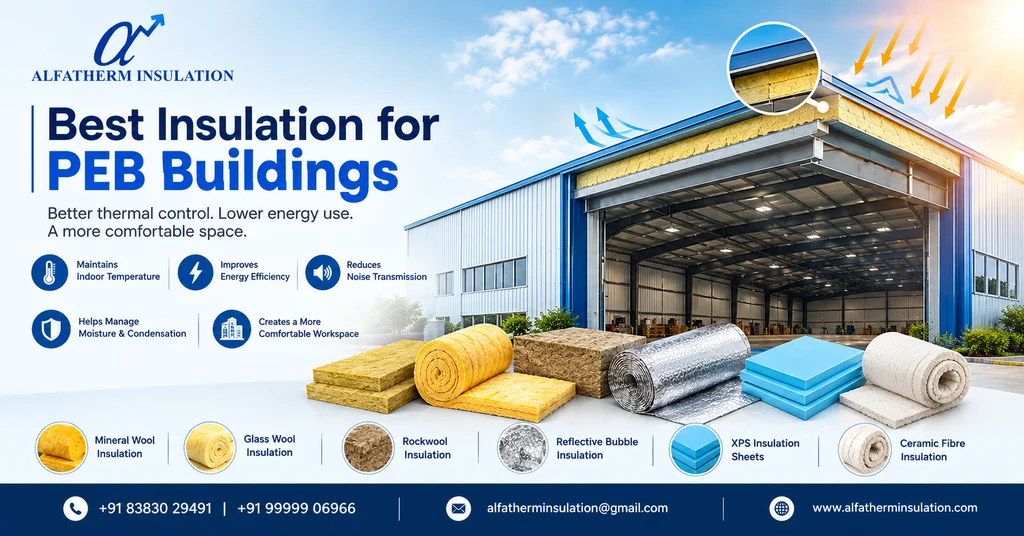
Alfatherm Insulation provides a range of insulation materials for industrial and commercial applications. Its product portfolio includes mineral wool, rockwool, glass wool, ceramic fibre products, XPS insulation sheets and reflective bubble insulation. The suitability of each material depends on the specific application.
When evaluating the Best insulation for PEB buildings, customers should discuss their roof structure, required thickness, temperature conditions, fire-performance requirements and installation method with an insulation supplier.
Alfatherm Insulation can help customers evaluate available material options for their project requirements.
Contact Alfatherm Insulation
For insulation material enquiries and project requirements, contact Alfatherm Insulation.
Phone: +91 83830 29491 / +91 99999 06966
Email: alfatherminsulation@gmail.com
social media : Follow Us
Conclusion
Selecting the Best insulation for PEB buildings is an important decision for improving thermal performance, supporting energy efficiency and creating more comfortable industrial environments. Mineral wool, glass wool, rockwool and reflective bubble insulation can serve different purposes, depending on their specifications and the overall building design.
Before making a purchase, compare thermal performance, thickness, fire classification, moisture control and installation requirements. A properly selected and installed insulation system can help manage heat transfer and support the long-term performance of factories, warehouses and commercial facilities.
Alfatherm Insulation offers a range of insulation materials for industrial and commercial projects, helping customers explore suitable options for their building requirements.

0 comments