
Bubble Foil Insulation for Tin Shed: Benefits, Uses in 2027
Bubble Foil Insulation for Tin Shed: Does It Work?
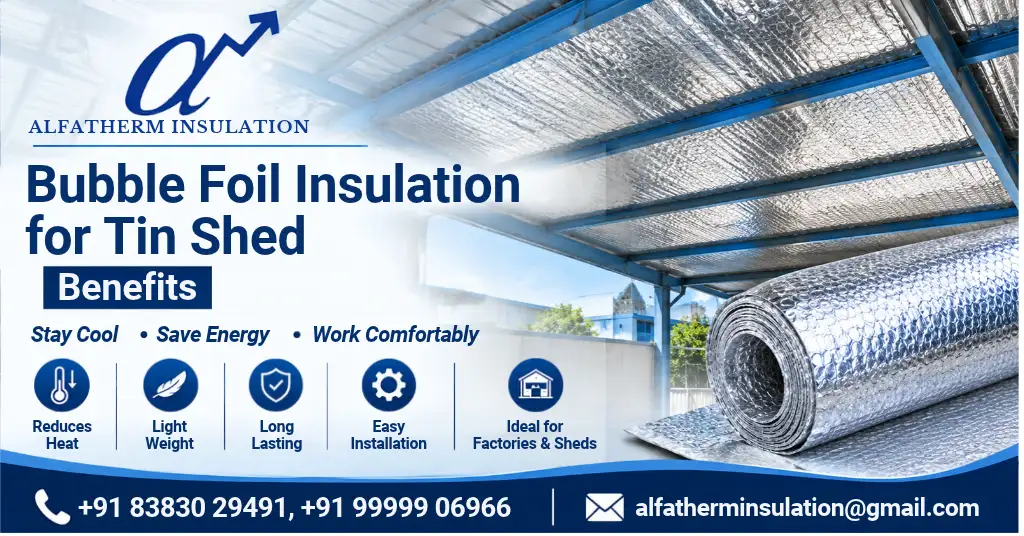
Bubble foil insulation for tin shed roofs is a sheet of reflective foil and air-filled polyethylene bubbles, fixed under the metal roof. It cuts radiant heat when the foil faces an air gap. It helps most on sun-heated roofs. It does not remove heat made inside the shed.
Why Do Tin Sheds Get So Hot?
Metal absorbs sunlight and heats up fast. The roof then passes that heat into the space below. Weak airflow and running machines add to it. Many Delhi NCR shed owners ask if bubble foil insulation for tin shed roofs is worth fitting. It can be, if the product and the fitting suit the roof.
What Is Bubble Foil Insulation for Tin Shed Roofs?
Bubble foil is a light sheet of air-filled polyethylene bubbles with reflective foil on one or both faces. It comes in single-bubble and double-bubble builds. Installers usually fit it under the metal sheet, with the foil facing an air gap. Our Aerolam bubble insulation range is one option for bubble foil insulation for tin shed projects.
How Does It Reduce Heat?
Sun-heated metal passes much of its heat down as radiation. The foil reflects part of that heat back. The bubbles add a little resistance, but most of the benefit comes from the foil.
The air gap matters. Foil pressed tight against another surface performs differently. So judge any bubble foil insulation for tin shed product by its test data, not by how shiny it looks.
Benefits of Bubble Foil Insulation for Tin Shed Roofs
- Less radiant heat: The foil limits heat entering the shed.
- Light weight: It adds less load than many rigid systems.
- Easy fitting: Sheets can be cut to suit the roof.
- Moisture resistance: Foil-faced sheets can resist moisture if the joints are sealed.
- Wide use: It suits factories, workshops and warehouses.
Bubble Foil vs Glass Wool vs Rockwool
These materials do different jobs, so do not choose by price alone.
| Material | How it works | Best for | Check before buying |
|---|---|---|---|
| Bubble foil | Reflects radiant heat; thin air layers add a little resistance | Sun-heated metal roofs where weight matters | Air gap, foil faces, sealed joints |
| Glass wool | Fibres trap air; also absorbs some sound | Roofs and ducts that need a fibrous layer | Density, facing, protection from moisture |
| Rockwool | Dense mineral fibres; non-combustible | Fire safety, sound control or higher temperatures | Density, thickness, fixing method |
Choose Bubble foil Insulation For Tin Shed roofs when radiant heat is the main problem and you want a light layer. Choose glass wool or rockwool when the design needs a fibrous layer, sound control or tested fire performance. Some sheds use more than one layer.
How to Choose: Buying Advice
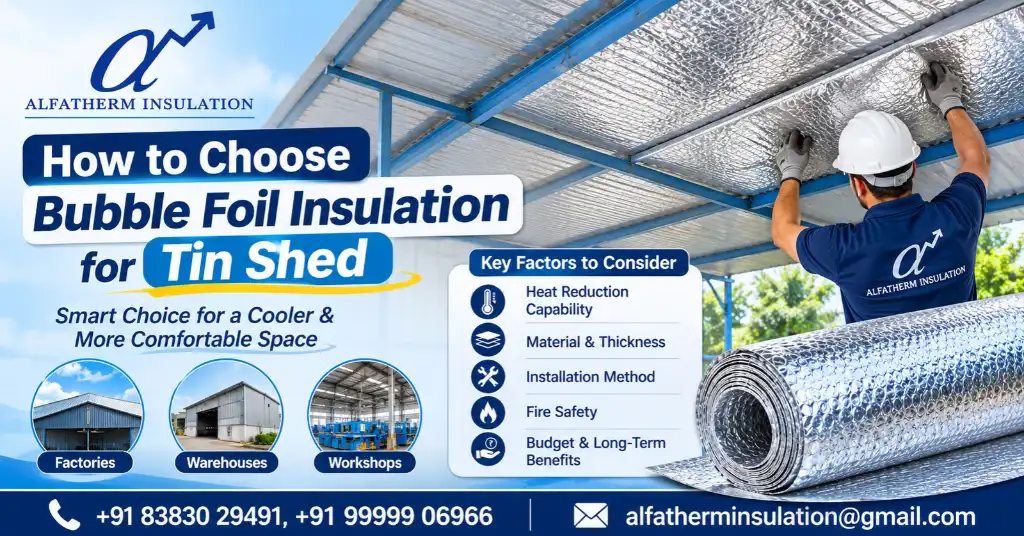
Before you buy bubble foil insulation for tin shed work, check these points:
- Roof sheet profile and purlin spacing
- New roof or existing roof
- The air gap you can keep
- Foil on one face or both
- A datasheet with thickness, test method and fire data
- Whether the joints can be sealed
- What the quote includes: material, fixings, labour and transport
Then ask the supplier:
- Tested under what air gap?
- Which test method was used?
- Can I see fire test data for this exact product?
- Who measured any claimed temperature drop?
Be careful with claims like “cools the shed by 10°C”. No fixed drop applies to every roof.
How to Install Bubble Foil Insulation for Tin Shed Roofs
Follow the manufacturer’s instructions. A typical under-deck fitting of bubble foil insulation for tin shed roofs goes like this:
- Inspect sheets, purlins and supports for damage or rust.
- Plan how the sheets will run across the structure.
- Position the insulation with the foil facing the right way and the air gap kept.
- Secure it with the fasteners the product needs.
- Seal the joints as specified.
- Check for loose sections and open joints.
Keep foil away from wiring, do not block drainage paths, and use safe access for work at height.
Can you fit it on an existing shed? Some systems fit under an existing metal roof without removing sheets. The installer must first check clearance, support spacing and roof condition. Insulation will not fix a leak, so repair leaks and rust first.
Condensation Under a Metal Roof
Metal sheets can get cold at night or in the monsoon. When humid air touches a cold surface, water forms and can drip onto goods. Tell us if your shed stores damp goods or releases steam. After the first monsoon, check for drips and rust at the fixings.
Cost of Bubble Foil Insulation for Tin Shed Roofs
The cost of bubble foil insulation for tin shed roofs covers more than the roll price. Add fixings, framing for the air gap, joint tape, labour and transport. Marketplace prices often show material only, so ask for the rate per sq ft, excluding GST, and what it includes. For a quote, send your roof size, photos, location and whether the shed is new or in use.
When Bubble Foil Is Not Enough
Bubble foil insulation for tin shed roofs works best as one part of a plan. If your shed has furnaces, motors or poor airflow, add ventilation and heat control. See How to Reduce Heat in a Factory Shed.
Conclusion
Bubble foil insulation for tin shed roofs is a practical way to cut radiant heat, but results depend on the product, the air gap and the fitting. Alfatherm Insulation can help you compare bubble foil insulation for tin shed options against glass wool and rockwool.
0 comments